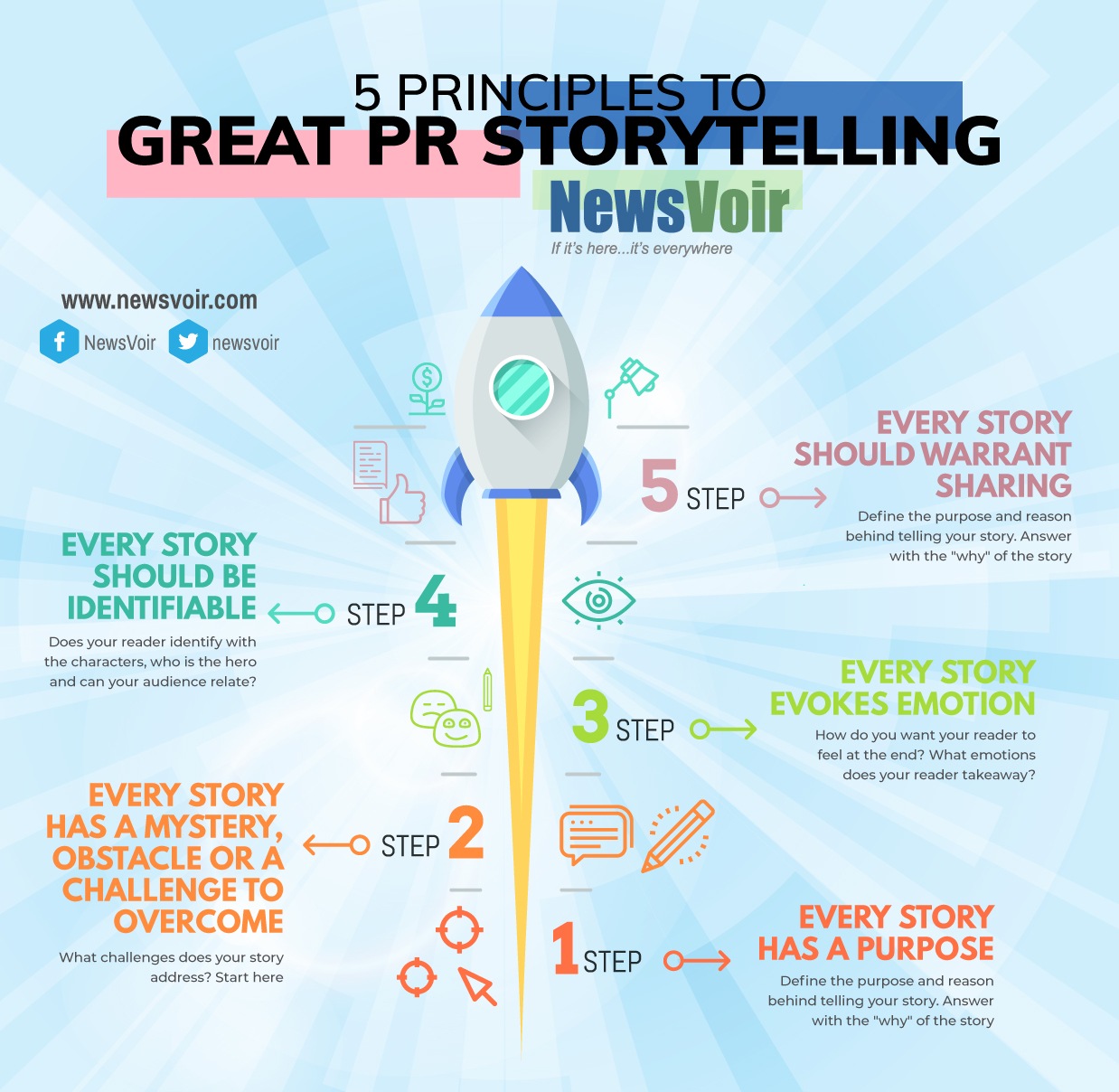
5 Principles of Effective PR Storytelling
Every brand has a story to tell. It could be about how a business started, the problem it wants to solve, an innovative product, a major achievement, or the people driving its growth.
However, simply sharing information about a company does not necessarily make it an interesting story. To capture attention, businesses need to communicate their message in a way that connects with audiences, creates interest, and gives people a reason to remember it.
This is where PR storytelling becomes important.
PR storytelling is the art of presenting a brand’s message, developments, and experiences through meaningful narratives. Instead of focusing only on facts and promotional claims, it gives audiences a reason to understand why a story matters.
A well-developed story can make a press release more engaging, strengthen a media pitch, communicate a company’s purpose, and help audiences connect with a brand.
But what makes a PR story effective?
Let’s explore five essential principles of effective PR storytelling and how businesses can apply them to their communication strategies.
What Is Personal PR?
Personal PR, or personal public relations, refers to the strategic process of managing how an individual is perceived by others.
It involves communicating your professional achievements, expertise, values, personality, and opinions through appropriate channels. The objective is to establish a clear and credible public identity that reflects who you are and what you represent.
Personal PR is not limited to celebrities, politicians, or public figures. Entrepreneurs, executives, consultants, freelancers, industry experts, and professionals across different sectors can benefit from it.
For example, a business leader may use LinkedIn to share industry insights, participate in relevant interviews, and communicate company developments. A consultant may publish expert articles and participate in professional discussions to demonstrate their knowledge.
In both cases, the individual is building a recognisable professional identity through consistent communication.
Why Is PR Storytelling Important for Businesses?
Your professional reputation is shaped by your expertise, actions, communication, relationships, and public presence. Personal PR helps you manage these elements more intentionally.
Here are some reasons why it matters.
1. Builds a Strong Professional Reputation
A strong reputation takes time to develop. It is shaped by the quality of your work, how you communicate, how you treat people, and the value you bring to professional relationships. Personal PR helps you communicate your strengths and achievements while ensuring that your public image reflects your professional values.
2. Creates Professional Opportunities
A clear and credible professional identity can make it easier for people to understand your expertise and areas of interest. It may create opportunities for speaking engagements, interviews, collaborations, partnerships, consulting assignments, and career advancement.
3. Establishes You as a Thought Leader
Sharing useful knowledge and informed opinions can help position you as a knowledgeable voice in your industry. Publishing articles, participating in discussions, contributing expert commentary, and speaking at relevant events can help demonstrate your understanding of industry developments.
4. Strengthens Your Professional Network
Personal PR is also about building relationships. Engaging with industry professionals, journalists, business leaders, mentors, and peers can help you develop meaningful connections. These relationships may lead to knowledge-sharing opportunities, collaborations, and professional growth.
5. Helps Manage Your Online Presence
People may search for your name before a meeting, interview, business discussion, or collaboration.
Your LinkedIn profile, published articles, media mentions, and other public information can influence the impression they form. Managing your digital presence helps ensure that the information associated with your name is accurate, relevant, and aligned with your professional identity.
8 Practical Ways to Build and Manage Your Personal PR
Building a positive public image requires consistency. It is not about gaining attention through every available platform but about communicating your identity and expertise in a meaningful way.
Here are eight practical ways to strengthen your personal PR.
1. Define Your Personal Brand
Before communicating your professional identity, understand what you want to be known for.
Think about your expertise, experience, values, achievements, and professional interests.
Ask yourself:
- What are my strongest professional skills?
- Which subjects or industries do I understand well?
- What value can I offer to others?
- What professional qualities do I want people to associate with me?
- Who are the audiences I want to connect with?
Your answers will help you develop a clear personal positioning.
For example, an entrepreneur may want to be recognised for business innovation and leadership, while a marketing professional may focus on digital strategy, brand communication, and industry insights. A clearly defined identity makes your communication more consistent across platforms.
2. Build a Strong Online Presence
Your online presence is often one of the first ways people discover you professionally. Start by reviewing the platforms where your name and professional information appear. LinkedIn is particularly useful for professionals because it allows you to communicate your experience, achievements, interests, and industry knowledge.
Make sure your profile includes:
- A professional profile photograph.
- A clear and relevant headline.
- An informative summary or About section.
- Updated professional experience.
- Key skills and achievements.
- Relevant certifications and qualifications.
- Links to published work, interviews, or professional contributions, where appropriate.
Also review your other public social media profiles. Ensure that the information and content visible to others do not create an inaccurate impression of your professional identity.
3. Share Your Knowledge and Industry Insights
One of the most effective ways to establish professional credibility is by sharing knowledge that others find useful.
You do not need to publish something every day. Focus on creating meaningful content related to your expertise.
You can share:
- Industry trends and developments.
- Professional experiences and lessons learned.
- Opinions on relevant business topics.
- Practical tips and recommendations.
- Insights from projects and initiatives.
- Observations about changes in your industry.
For example, a PR professional could share perspectives on media relations, crisis communication, brand reputation, and digital PR.
Publishing consistently helps people understand your areas of expertise and gives them a reason to engage with your professional identity.
4. Build Meaningful Professional Relationships
Networking is an important part of personal PR, but it should go beyond collecting contacts.
Focus on building genuine relationships with people who share your professional interests or work in related industries.
You can:
- Attend relevant conferences, seminars, and networking events.
- Participate in professional communities.
- Connect with industry experts on LinkedIn.
- Engage thoughtfully with other professionals’ content.
- Stay in touch with former colleagues and mentors.
- Offer useful information or assistance when appropriate.
Meaningful conversations can create opportunities for collaboration, knowledge-sharing, and professional development. The goal is to develop relationships based on mutual respect and value rather than approaching every interaction with an immediate expectation.
5. Develop Relationships With the Media
Media visibility can be an important part of personal PR, particularly for entrepreneurs, senior executives, industry experts, and public-facing professionals.
Journalists regularly seek credible sources who can provide relevant information, expert opinions, and perspectives on developing stories.
To build media relationships:
- Identify journalists who cover your area of expertise.
- Read their recent articles and understand their editorial interests.
- Share relevant information and expert insights.
- Be available for appropriate interviews and commentary.
- Respond to media enquiries professionally and within agreed timelines.
- Provide accurate information and supporting facts.
For example, a business leader with experience in the technology sector may contribute expert commentary on artificial intelligence, cybersecurity, or digital transformation.
Relevant media coverage can introduce your expertise to wider audiences and contribute to your professional reputation. However, editorial coverage depends on the publication’s interest and independent editorial decisions.
6. Find the Right Mentor and Focus on Continuous Learning
Professional growth requires continuous improvement. No matter how much experience you have, there is always something new to learn.
A mentor can provide valuable guidance, constructive feedback, and a different perspective on your professional development.
Look for someone whose experience and approach align with your goals. Be open to feedback and use it to identify areas where you can improve.
You should also invest time in learning about developments in your industry, new technologies, communication trends, and emerging professional practices.
Continuous learning helps you remain relevant and ensures that the knowledge you share with others reflects current industry developments.
7. Monitor and Protect Your Public Reputation
Building a public image is only one part of personal PR. Managing your reputation is equally important.
Pay attention to how your name, work, and professional contributions appear online.
Practical steps include:
- Search your name periodically to understand what information appears publicly.
- Review your social media profiles and public posts.
- Correct inaccurate professional information wherever possible.
- Respond to criticism thoughtfully and professionally.
- Avoid sharing unverified information or making unsupported claims.
- Be careful when participating in sensitive or controversial online discussions.
- Maintain consistency between your professional values and public behaviour.
If negative information or criticism appears, assess the situation before responding. A calm, factual, and appropriate response is generally more constructive than reacting emotionally.
8. Maintain Consistency Between Your Online and Offline Image
Your public image is not built through digital communication alone.
How you behave in meetings, professional events, interviews, business interactions, and everyday conversations also contributes to your reputation.
Your online communication should reflect the same professionalism, values, and expertise that people experience when interacting with you directly.
Consistency helps build trust and makes your professional identity more credible.
Personal PR Channels: Where Should You Build Your Presence?
Different platforms serve different purposes. Choose channels based on your professional objectives and the audiences you want to reach.
| Channel | How it supports personal PR |
|---|---|
| Share professional updates, industry insights, achievements, and opinions. | |
| Personal website or portfolio | Present your experience, work, expertise, and published contributions. |
| Media publications | Build visibility through interviews, expert commentary, and relevant editorial coverage. |
| Professional events | Develop relationships and communicate your expertise through discussions and presentations. |
| Blogs and articles | Share detailed knowledge, opinions, and professional experiences. |
| Podcasts and webinars | Reach audiences through interviews, discussions, and expert contributions. |
| Social media | Communicate interests, professional activities, and relevant updates with appropriate audiences. |
You do not need to be active on every platform. Focus on the channels that are most relevant to your goals and where your intended audience is likely to engage.
Common Personal PR Mistakes to Avoid
While building a professional public image, certain mistakes can affect how others perceive you.
Being inconsistent: Frequently changing your professional positioning or communicating unrelated messages can make your identity unclear.
Focusing only on self-promotion: Constantly highlighting achievements without sharing useful information can make your communication appear one-sided.
Ignoring your online presence: Outdated profiles, inaccurate information, or inappropriate public content can create an impression that does not reflect your current professional identity.
Chasing visibility without relevance: Being visible everywhere is not necessarily beneficial. Focus on platforms and opportunities that support your professional objectives.
Neglecting professional relationships: Networking should involve genuine engagement and regular communication, not just connecting with people when you need something.
Reacting emotionally to criticism: Responding impulsively to negative comments can create further reputational challenges. Evaluate the situation and respond appropriately.
How to Measure the Effectiveness of Your Personal PR Strategy
Personal PR is a long-term activity, so its effectiveness should not be measured only through followers, likes, or the number of times your name appears online.
Instead, evaluate whether your professional visibility and reputation are developing in the right direction.
Some useful indicators include:
- Professional network growth: New relevant connections and meaningful professional relationships.
- Content engagement: Responses, discussions, shares, and engagement with your professional content.
- Media visibility: Interviews, expert quotes, articles, and other relevant media mentions.
- Speaking opportunities: Invitations to participate in conferences, webinars, podcasts, and industry discussions.
- Website and profile visibility: Visits to your professional website, portfolio, or LinkedIn profile.
- Collaboration opportunities: New professional projects, partnerships, and invitations resulting from your visibility.
- Audience relevance: Whether the people engaging with your content align with your professional objectives.
Review these indicators periodically and adjust your approach based on what is creating meaningful professional engagement.
Frequently Asked Questions (FAQs)
1. What is personal PR?
Personal PR, or personal public relations, is the process of building and managing an individual’s public image and professional reputation. It involves communicating expertise, achievements, values, and professional interests through media, social platforms, networking, and other relevant channels.
2. Why is personal PR important?
Personal PR helps individuals establish professional credibility, strengthen their reputation, build meaningful relationships, and create opportunities for career development, business growth, and industry recognition.
3. How can I improve my personal PR?
You can improve your personal PR by defining your professional identity, maintaining an updated online presence, sharing useful industry insights, developing professional relationships, engaging with relevant media, and consistently demonstrating your expertise.
4. What is the difference between personal PR and personal branding?
Personal branding focuses on defining and communicating the identity, values, expertise, and qualities that make an individual distinctive. Personal PR focuses on managing public perception and building relationships through communication, media engagement, and reputation management. The two concepts overlap and often work together.
5. Which platforms are useful for personal PR?
LinkedIn, personal websites, professional blogs, industry publications, podcasts, webinars, and relevant social media platforms can support personal PR. The most suitable channels depend on your professional goals and target audience.
6. How does media coverage help personal PR?
Media coverage can introduce an individual’s expertise and perspectives to audiences beyond their existing professional network. Interviews, expert quotes, and articles in relevant publications can contribute to professional visibility and credibility.
7. How long does it take to build a strong personal reputation?
Building a strong reputation is an ongoing process. It depends on the individual’s professional contributions, communication, relationships, consistency, and public behaviour. Meaningful credibility is developed over time rather than through a single post or media appearance.
Final Thoughts
Personal PR is not about creating an artificial image or seeking attention at every opportunity. It is about communicating your professional identity clearly, demonstrating your expertise, and building relationships that strengthen your reputation over time.
From maintaining a credible online presence and sharing industry insights to networking, continuous learning, and developing media relationships, every interaction contributes to how others perceive you.
The key is to remain authentic, consistent, and relevant. When your professional actions align with your public communication, you create a stronger foundation for long-term credibility and recognition.
Your reputation is one of your most valuable professional assets. Build it thoughtfully, communicate it effectively, and manage it consistently.
More Information
Explore more insights on public relations, media visibility, and professional communication:
- How to Build Strong Relationships With Business Media
- How Small PR Moves Improve Your Chances of Media Coverage
- How Public Relations Helps Build a Strong Reputation
Looking to build your professional visibility through media communication? Explore NewsVoir’s press release distribution services.