
Content Distribution Strategy That Improves Brand Visibility
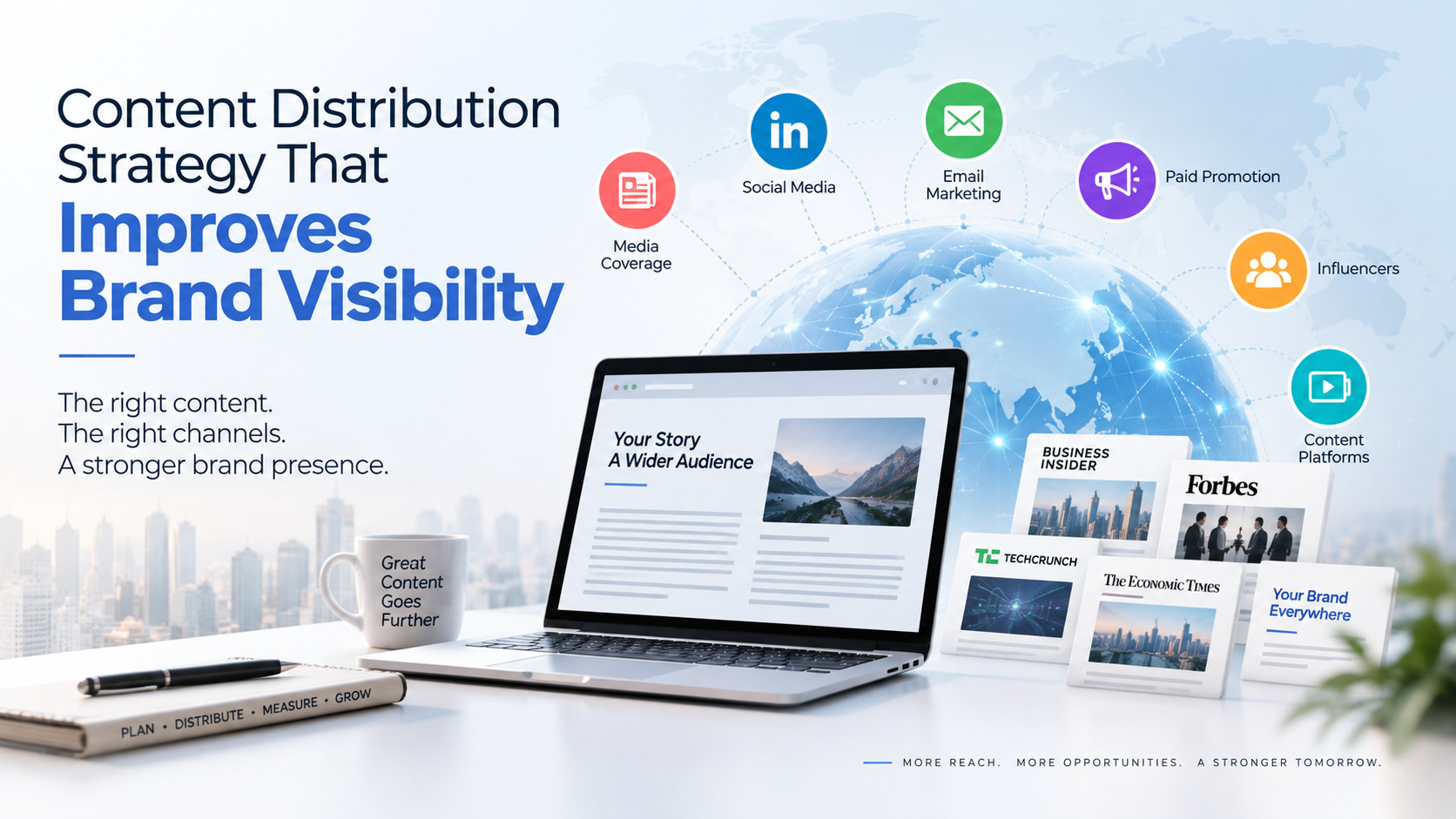
Creating valuable content is only the first step. Whether it is a blog article, social media post, newsletter, infographic, video, or press release, content needs to reach the right audience to generate visibility and engagement.
This is where a content distribution strategy becomes important. It helps brands determine where, how, and when to share their content based on their target audience, goals, budget, and available resources.
A well-planned strategy can help brands maximize their reach, make better use of existing content, and build visibility across relevant organic, paid, earned, and owned channels.
What Is a Content Distribution Strategy?
A content distribution strategy is a planned approach to sharing and promoting content through the channels most relevant to your target audience.
It helps brands decide where to distribute content, which audiences to target, how much to invest, and which metrics to track.
Depending on the content and campaign goals, distribution can include social media, email, websites, news and media platforms, paid channels, and guest media.
The objective is not simply to publish content across as many channels as possible, but to choose the right channels and use them consistently to maximize reach and visibility.
Why Is a Content Distribution Strategy Important?
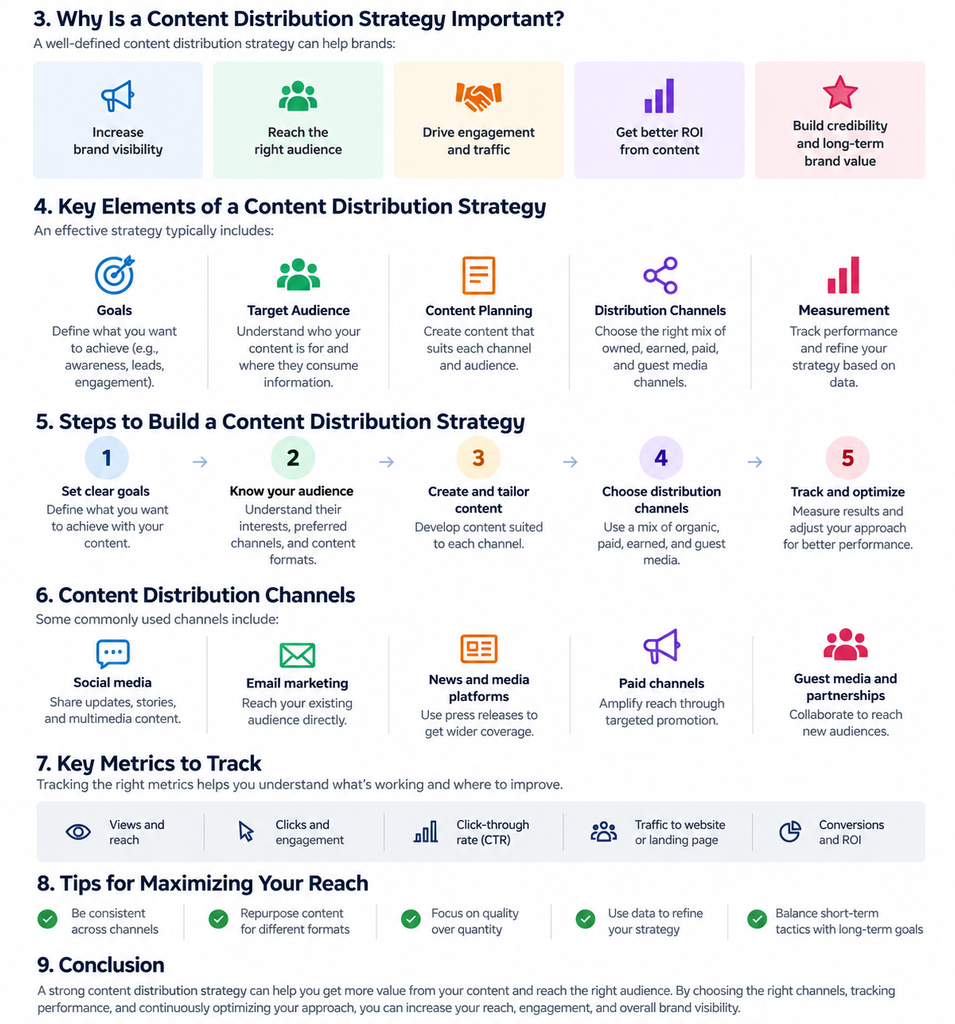
Creating high-quality content does not automatically guarantee that it will reach the right audience. A well-planned content distribution strategy helps brands identify the channels where their target audiences are most active and ensure that content is promoted effectively.
Effective distribution can help brands increase visibility, reach relevant audiences, drive engagement, and get more value from the content they create. It also allows brands to make better use of their time and resources by focusing on channels that support their specific goals.
A consistent approach to content distribution can also contribute to long-term brand visibility and credibility, rather than relying only on short-term spikes in traffic or engagement.
Key Elements of a Content Distribution Strategy
An effective content distribution strategy starts with clear goals. Before choosing where to distribute your content, define what you want to achieve, whether that is increasing brand visibility, driving website traffic, generating engagement, or supporting business leads.
Your target audience should also guide your distribution decisions. Understand who you want to reach, which platforms they use, and what type of content they are most likely to engage with. The same content may need to be adapted for different audiences and channels.
Another important element is choosing the right content distribution channels. Depending on your objectives, these may include owned channels such as your website and email, organic and paid social media, earned media, news distribution, and guest media.
Finally, establish the metrics and performance indicators you will use to evaluate your efforts. Tracking results helps you understand which channels are contributing to your goals and where your strategy can be improved.
Steps to Build a Content Distribution Strategy
Start by defining what you want your content to achieve. Clear goals help you decide which channels to use and how to measure performance.
Next, identify your target audience and understand where they are most likely to discover and engage with your content. Select distribution channels based on these audience preferences, your content format, and available resources.
Once the channels are selected, plan how the content will be adapted and distributed across them. Test different approaches, track the results, and refine your strategy based on what performs well.
Finally, maintain consistency. Content distribution is not a one-time activity; regularly promoting and repurposing useful content can help extend its reach and value over time.
Content Distribution Channels
Different channels serve different purposes, so your content distribution strategy should focus on the platforms that best match your audience, content, and goals.
Owned channels include platforms your brand controls, such as your website, blog, email newsletters, and brand-managed social media accounts. These channels provide a foundation for publishing and maintaining your content.
Earned channels involve visibility gained through third parties, such as media coverage, mentions, social sharing, backlinks, and guest contributions. These can help extend the reach of content beyond the audience you already have.
Paid channels involve investing in promotional placements, such as search advertising, paid social media, sponsored content, and other paid promotions. They can help brands reach specific audiences and increase the visibility of selected content.
The right approach is not to use every available channel. Select a combination based on your audience, content format, objectives, budget, and resources, and focus on the channels that deliver meaningful results.
Key Metrics to Track
Measuring your content distribution efforts helps you understand whether your content is reaching the right audience and contributing to your goals. The metrics you choose should depend on the purpose of your content and the channels you use.
Useful metrics can include reach and impressions, website traffic, clicks, engagement, click-through rate, time spent on content, leads, conversions, and return on investment. For content focused on awareness, reach and visibility can be useful indicators, while engagement and conversions can provide a better understanding of how audiences are responding and taking action.
Review these metrics regularly to identify which channels and content formats are performing well. You can then adjust your content distribution strategy, budget, and channel mix based on the results.
Tips for Maximizing Your Content Reach
To get more value from your content, focus on consistent distribution rather than one-time promotion. Adapt your content to suit each channel while keeping the core message consistent.
Test different distribution channels and content formats to understand what works best for your audience. You can also repurpose useful content into different formats, such as turning a blog into social posts, an infographic, or an email newsletter.
Most importantly, use your performance data to refine your content distribution strategy. Focus more time and resources on channels that consistently help you reach the right audience and support your campaign goals.
Conclusion
Creating valuable content is only part of the process. A well-planned content distribution strategy helps ensure that your content reaches the right audience through the right channels.
By selecting relevant platforms, setting clear goals, tracking performance, and consistently refining your approach, brands can maximize content reach, improve visibility, and get greater long-term value from the content they create.
Read More: Explore our related guides on content distribution, press release distribution, and media outreach to strengthen your brand visibility strategy.
Frequently Asked Questions
1. What is a content distribution strategy?
A content distribution strategy is a planned approach to sharing and promoting content through channels that are relevant to your target audience and business goals.
2. Why is content distribution important?
Content distribution helps brands reach the right audience, increase visibility, drive engagement, and get more value from the content they create.
3. What are the main content distribution channels?
Common channels include websites and blogs, email, social media, news and media platforms, paid advertising, and guest media.
4. How do I choose the right content distribution channels?
Choose channels based on your target audience, content format, campaign objectives, budget, and available resources. Track performance to identify which channels are most useful for your goals.
5. How can I measure the success of a content distribution strategy?
You can measure performance using metrics such as reach, impressions, website traffic, clicks, engagement, click-through rate, leads, conversions, and ROI.