
7 Essential Elements of an Effective Press Release
A well-structured press release makes it easier for journalists and audiences to understand the news being communicated. From the headline and opening paragraph to the supporting details, boilerplate, and contact information, each part of a press release has a specific purpose.
Understanding the elements of a press release can help brands organize their announcements more clearly, provide the information journalists need, and create releases that are easier to read and distribute.
In this guide, we explain the seven essential elements of an effective press release and how each one contributes to a clear and professional announcement.
What Are the Elements of a Press Release?
The elements of a press release are the key components that organize a news announcement and make it easy for journalists and readers to understand. Each element has a specific purpose, from capturing attention with the headline to providing essential details and a way to learn more.
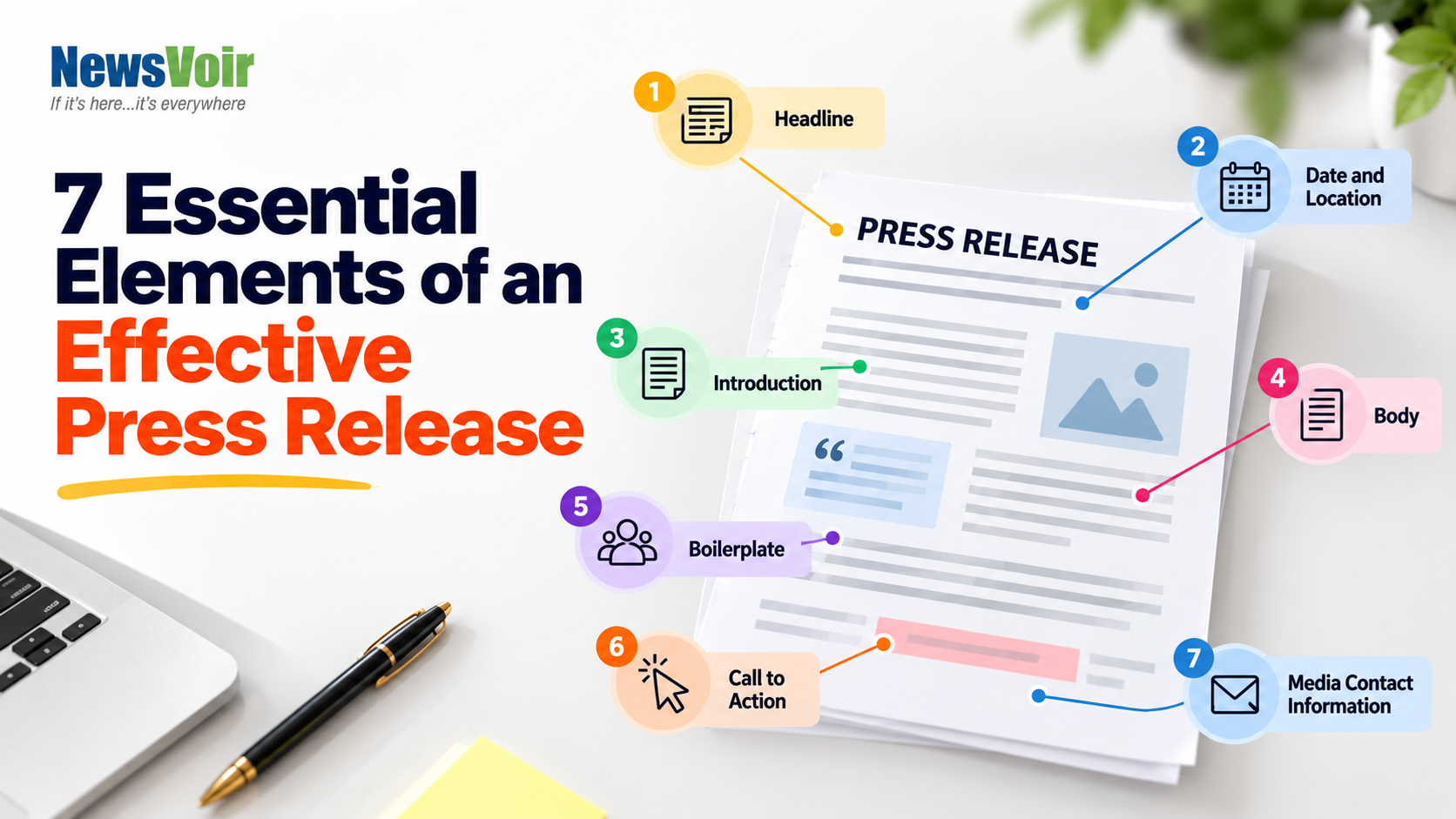
A clear press release generally includes a headline, date and location, introduction, body, boilerplate, call to action, and media contact information. Together, these components create a structured format that presents the news in a concise and professional way.
The exact format can vary depending on the announcement and distribution channel, but the core elements should work together to communicate the news clearly and give readers the information they need. NewsVoir’s existing press-release guidance also emphasizes the importance of the headline, opening, body content, multimedia, and SEO in creating an effective release.
7 Essential Elements of an Effective Press Release
1. Headline
The headline is the first part of a press release that journalists and readers see, so it should communicate the main news clearly and quickly. A strong headline should be specific, informative, and relevant to the announcement without using unnecessary promotional language.
2. Date and Location
The date and location provide basic context about when and where the announcement is being issued. This information helps readers understand the timing of the news and provides useful context for journalists covering the story.
3. Introduction
The introduction should summarize the most important information in the announcement. It should quickly explain who, what, when, where, why, and how where relevant, allowing readers to understand the main news without having to read the entire release.
4. Body
The body provides additional details and context about the announcement. It can include supporting facts, statistics, quotes, background information, and other details that help explain why the news is relevant. Keep the content focused and avoid unnecessary information or repetition.
5. Boilerplate
The boilerplate is a short description of the company or organization issuing the press release. It typically explains what the organization does and provides relevant background information that journalists and readers can use for context.
6. Call to Action
A call to action tells readers what they can do after reading the press release. Depending on the announcement, this could include visiting a website, learning more about a product or service, registering for an event, downloading additional information, or contacting the organization.
7. Media Contact Information
Media contact information gives journalists a direct way to request additional information or follow up on the announcement. Include the relevant contact person’s name, organization, email address, and phone number where appropriate.
How to Make Your Press Release More Effective
Including all the elements of a press release is important, but how those elements are written and presented also affects the overall impact of the announcement. A clear structure, relevant information, and concise writing can make the release easier for journalists and audiences to understand. NewsVoir’s press-release guidance emphasizes keeping the headline direct, communicating the key news early, and using supporting details without unnecessary repetition.
Start with a headline that clearly communicates the main news. The opening should then quickly explain the announcement and provide the most important details. This allows readers to understand the story without having to search through lengthy paragraphs for the main information.
Keep the body focused on relevant facts, supporting details, quotes, and context. Avoid long paragraphs, excessive promotional language, repetition, and unnecessary jargon. Each paragraph should add useful information to the story.
Where relevant, include multimedia such as images, infographics, audio, or video to provide additional context and make the announcement more engaging. NewsVoir’s guidance specifically highlights multimedia as an important component of digital press releases.
Finally, consider how the press release will be discovered online. Use relevant keywords naturally, include useful links where appropriate, and optimize multimedia elements with relevant information. The focus should remain on creating useful content for readers while applying SEO practices naturally.
5. Press Release Checklist
Before distributing your press release, check that it includes:
- A clear and relevant headline
- Date and location
- A concise introduction covering the key details
- Supporting information and relevant quotes
- A clear company boilerplate
- A relevant call to action
- Media contact information
- Appropriate images or other multimedia
- Natural use of relevant keywords
- Accurate and easy-to-read information
Frequently Asked Question
What are the main elements of a press release?
The main elements of a press release include the headline, date and location, introduction, body, boilerplate, call to action, and media contact information. Together, these components provide a clear structure for presenting an announcement.
Why is the headline important in a press release?
The headline communicates the main news and creates the first impression of the announcement. A clear and informative headline helps journalists and readers quickly understand what the press release is about.
What should be included in the introduction of a press release?
The introduction should provide the most important information about the announcement. It should ideally address the key details of who, what, when, where, why, and how, where relevant.
What is a boilerplate in a press release?
A boilerplate is a short description of the company or organization issuing the press release. It provides background information and helps readers understand the organization behind the announcement.
Does every press release need a call to action?
A call to action is useful when readers need to take a specific next step, such as visiting a website, registering for an event, learning more about a product, or contacting the organization. The CTA should be relevant to the announcement rather than added simply for promotional purposes.