
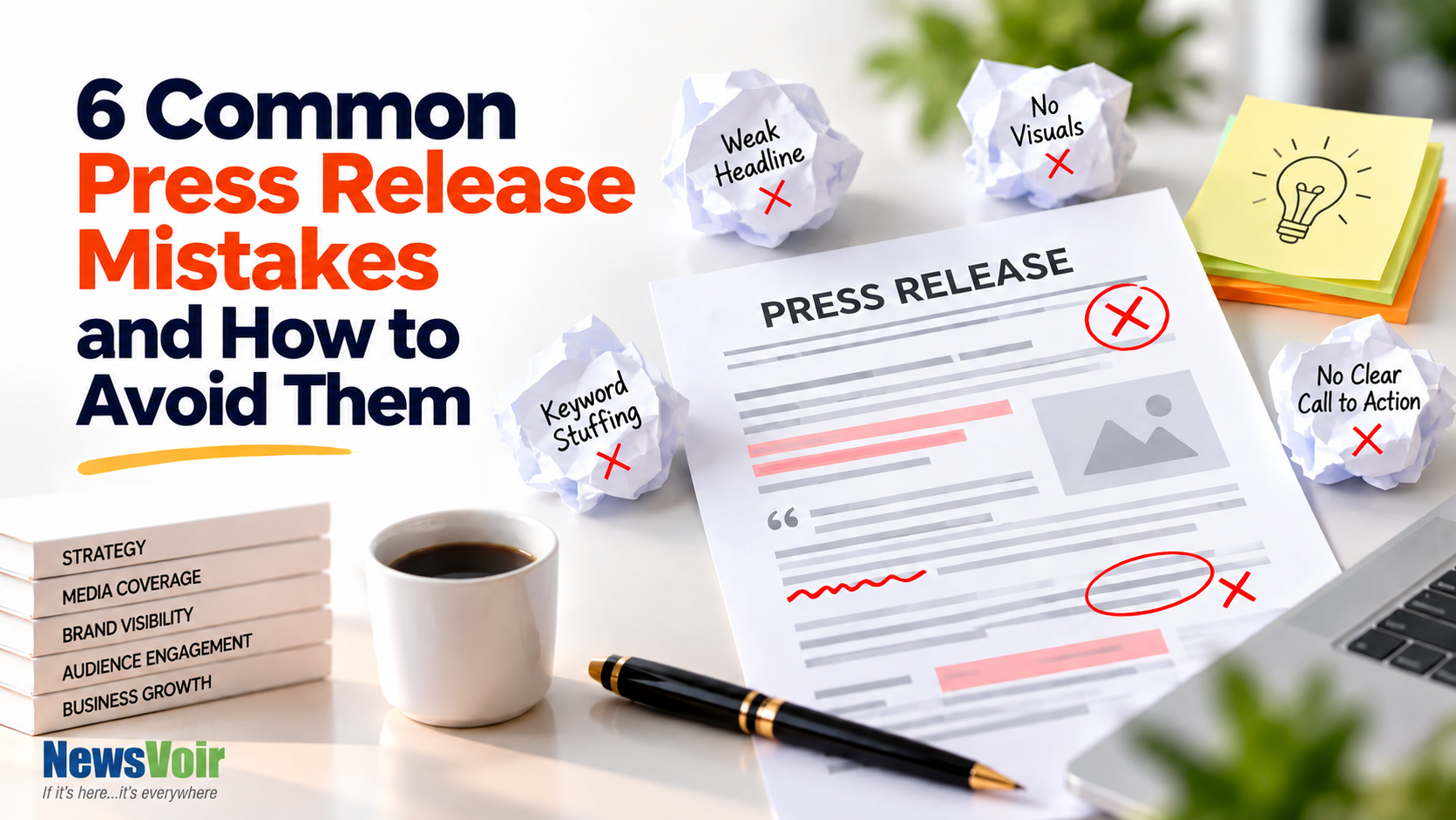
6 Common Press Release Mistakes and How to Avoid Them
A press release can help brands communicate important announcements, attract media attention, and increase visibility. However, even a newsworthy announcement can lose its impact when the press release contains avoidable errors.
From weak headlines and repetitive announcements to excessive keywords and a lack of visuals, common press release mistakes can make it harder for journalists and audiences to engage with the story.
In this guide, we look at six common press release mistakes and explain how brands can avoid them to create clearer, more relevant, and more effective press releases.
What Are Press Release Mistakes?
Press release mistakes are errors in the way a press release is written, structured, or presented that can reduce its clarity and effectiveness. These mistakes can make an announcement less relevant to journalists and audiences or make it harder for the main message to stand out.
Common issues include using weak headlines, repeating the same type of announcement too often, writing in a blog-style format, leaving out a clear call to action, using irrelevant visuals, or adding too many keywords.
Avoiding these mistakes does not mean following a rigid formula for every release. The goal is to make each press release clear, newsworthy, focused, and useful to its intended audience.
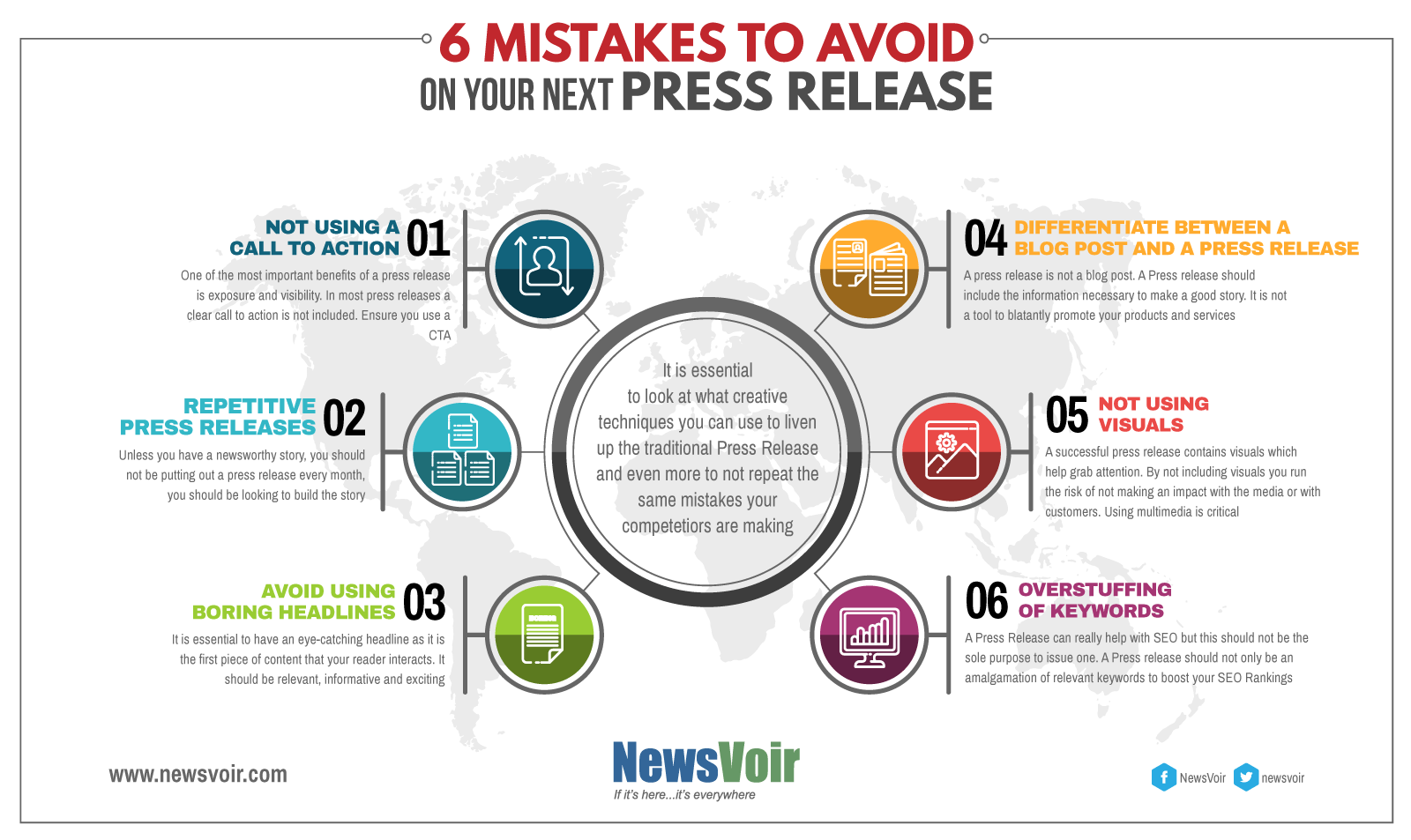
6 Common Press Release Mistakes and How to Avoid Them
1. Not Including a Clear Call to Action
A press release should make it clear what readers can do after learning about the announcement. A relevant call to action (CTA) can guide readers toward the next step, such as visiting a website, learning more about a product, registering for an event, or contacting the organization.
Without a clear CTA, readers may understand the announcement but have no obvious way to engage further.
2. Issuing Repetitive or Non-Newsworthy Press Releases
Not every company update requires a press release. Repeatedly issuing releases without a genuinely newsworthy announcement can reduce the relevance of your communication.
Before preparing a release, consider whether the announcement offers useful information, a significant development, or a story that would be relevant to the intended audience. When there is no meaningful news, it may be better to focus on developing the story before issuing a release.
3. Using Weak or Boring Headlines
The headline is one of the first elements a reader encounters, so it should clearly communicate what the announcement is about. A strong press release headline should be relevant, informative, and engaging without becoming exaggerated or misleading.
Focus on the most important aspect of the announcement and communicate it clearly in the headline.
4. Treating a Press Release Like a Blog Post
A press release and a blog post serve different purposes. A press release should provide the essential information needed to understand a newsworthy announcement and give journalists enough context to assess the story.
Avoid turning the release into a long promotional article about your products or services. Keep the focus on the announcement, its relevance, supporting information, and the details needed to communicate the news effectively.
5. Not Using Relevant Visuals
Relevant visuals can make a press release more engaging and help communicate information more effectively. Depending on the story, this could include photographs, infographics, videos, product images, or other useful multimedia.
When appropriate visuals are available, including them can help the announcement stand out and give media and audiences additional material to work with.
6. Overusing Keywords
Press releases can support online visibility, but SEO should not become the sole reason for issuing one. Filling a release with repeated keywords can make the content feel unnatural and distract from the actual news.
How to Write a More Effective Press Release
Writing an effective press release starts with a clear understanding of the news you want to communicate. Focus on the most important information and make sure the announcement is relevant to the intended audience.
Start with a clear and informative headline that communicates the main news. The opening paragraph should quickly explain what happened, who is involved, and why the announcement matters. Supporting details, quotes, statistics, and relevant background information can then provide additional context.
Keep the language clear and focused throughout the release. Avoid unnecessary promotional language, repetition, and excessive keywords. Where appropriate, include relevant visuals that support the story rather than simply decorating the release.
Press Release Checklist
Before distributing a press release, review the content to make sure the announcement is clear, relevant, and complete. A simple checklist can help identify common press release mistakes before the release reaches journalists and audiences.
- Newsworthiness: Does the release communicate a genuine and relevant announcement?
- Headline: Does the headline clearly communicate the main news?
- Opening: Does the introduction quickly explain the key details?
- Key Information: Are the important facts, names, dates, and supporting details included?
- Quotes: Are the quotes relevant and useful to the story?
- Clarity: Is the language clear, concise, and easy to understand?
- Visuals: Are relevant images or other supporting visuals included where appropriate?
- Keywords: Are keywords used naturally without unnecessary repetition?
- Call to Action: Is there a clear next step for readers?
- Accuracy: Have names, figures, links, contact details, and other important information been checked?
Using this checklist before distribution can help catch avoidable errors and improve the overall quality of the press release.
Need professional help in Press Release writing and distribution?
FAQs
What are the most common press release mistakes?
Common mistakes include using weak headlines, issuing repetitive or non-newsworthy announcements, writing a press release like a blog post, leaving out a clear call to action, not using relevant visuals, and overusing keywords.
Why is a strong headline important in a press release?
The headline helps readers quickly understand what the announcement is about. A clear and informative headline can make the main news easier to identify and encourage further reading.
Should every company update be distributed as a press release?
No. A press release is most useful when there is a meaningful announcement or development that is relevant to the intended audience. Routine or repetitive updates may not provide enough news value.
Should keywords be used in a press release?
Relevant keywords can be included naturally, particularly when they accurately describe the announcement. However, excessive keyword repetition can make the content difficult to read and distract from the main news.
What should I check before distributing a press release?
Check that the announcement is newsworthy, the headline and opening are clear, the key information is accurate, relevant visuals are included where appropriate, keywords are used naturally, and there is a clear call to action.
More Information