

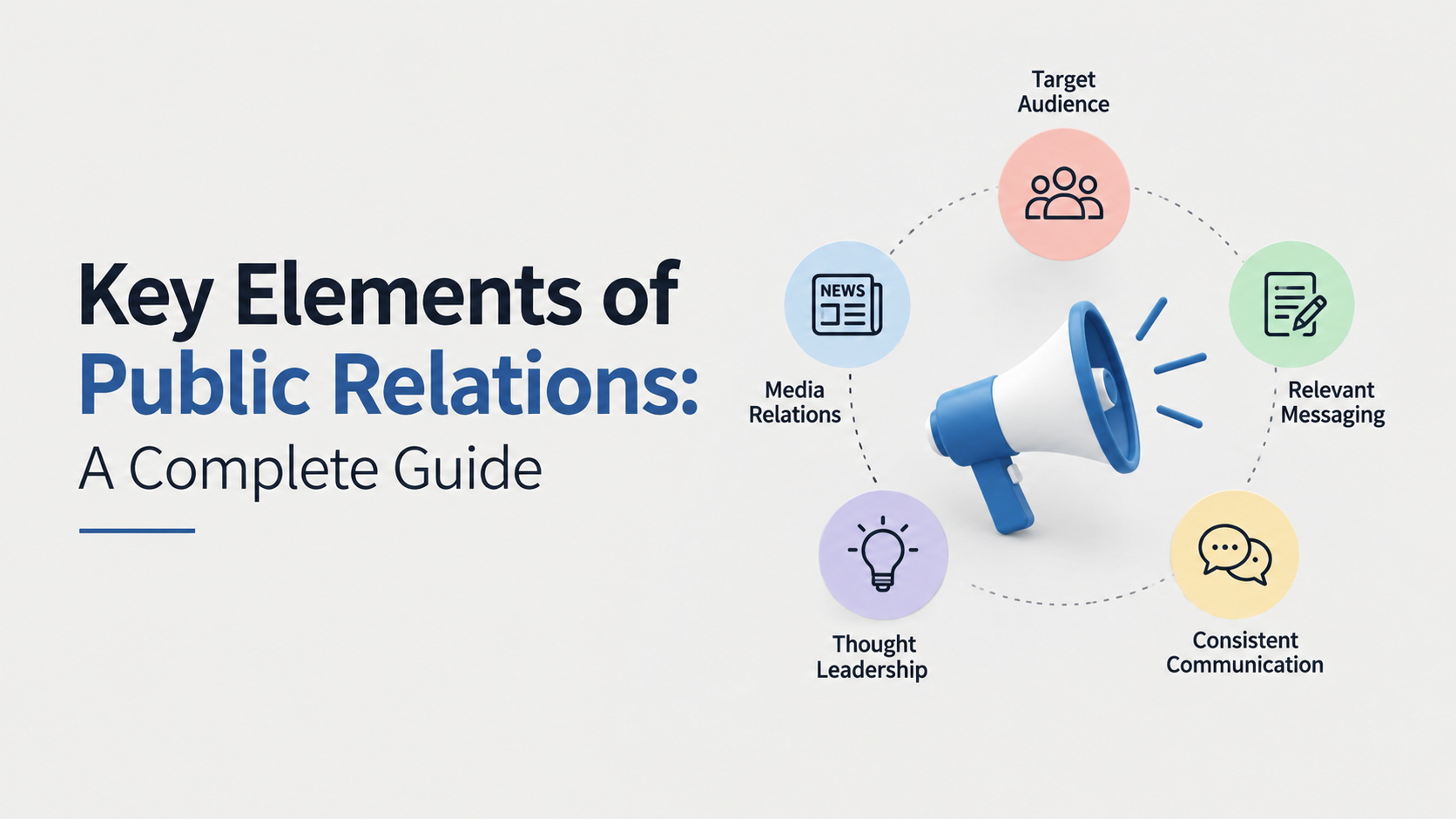
Key Elements of Public Relations: A Complete Guide
Public relations is an important part of how organizations communicate with their audiences, build credibility, and maintain their reputation. From media relations and press releases to digital communication and thought leadership, PR involves several elements that work together to strengthen a brand’s presence.
A successful PR approach is not just about getting media coverage. It requires understanding your audience, developing relevant messages, building relationships with the media, and communicating consistently across the channels where your audience is active.
In this guide, we explore the key elements of public relations and how brands can use them to build stronger communication, visibility, and long-term relationships with their audiences.
What Is Public Relations?
Public relations (PR) is the process of communicating with the public, media, customers, and other relevant audiences to build awareness, credibility, and positive relationships around an organization or individual.
PR involves more than media coverage. It includes how a brand communicates its message, engages with its audiences, builds relationships with journalists and industry professionals, and maintains consistency across its communication channels.
With digital platforms, social media, online content, reviews, and other forms of communication now playing an important role in how people discover and evaluate brands, having a clear and consistent PR approach has become increasingly important
Why Are the Elements of Public Relations Important?
Public relations involves several activities that work together to shape how a brand communicates with its audiences and builds relationships with them. Focusing on the key elements of public relations helps ensure that communication is planned rather than fragmented.
A clear PR approach can help brands reach relevant audiences, communicate consistent messages, build media relationships, and establish credibility. It also helps organizations choose the right communication channels and focus their efforts on activities that support their broader goals.
The important thing is to treat PR as an ongoing process. Building visibility and relationships takes consistent communication rather than relying on a single campaign or announcement.
Key Elements of Public Relations
An effective PR strategy brings several elements together to create clear communication and meaningful relationships with the people who matter to a brand.
Define Your Target Audience
Understanding your target audience is the foundation of effective PR. Identify who you want to reach, what matters to them, and where they are most likely to consume information. This helps you develop communication that is relevant and purposeful.
Build Strong Media Relationships
Building relationships with relevant journalists and media outlets can help brands communicate their stories more effectively. Rather than approaching media only when you have an announcement, maintain relationships by understanding their interests and providing relevant information.
Keep Your Communication Relevant
PR messages should be clear, timely, and relevant to the intended audience. Whether you are announcing a product, sharing research, or communicating a company milestone, focus on why the information matters and avoid unnecessary promotional language.
Establish Thought Leadership
Sharing useful expertise can help individuals and organizations build credibility within their industry. Thought leadership can include expert commentary, opinion articles, interviews, industry insights, and other forms of valuable content.
Maintain Consistent Communication
PR is an ongoing process rather than a one-time activity. Consistent communication across media, digital platforms, and other relevant channels helps reinforce your brand message and maintain relationships with your audiences.
How to Build an Effective PR Strategy
Building an effective PR strategy starts with clear objectives. Define what you want your PR efforts to achieve, whether it is increasing brand visibility, building credibility, reaching a new audience, or supporting a specific business initiative.
Next, identify the audiences and media outlets that are most relevant to your goals. Develop key messages that communicate your brand clearly and consistently, and choose PR activities such as media outreach, press releases, thought leadership, events, and digital content based on your objectives.
Finally, track your PR activities and results regularly. Reviewing media coverage, website traffic, engagement, and other relevant outcomes can help you understand what is working and refine your strategy over time.
Common Mistakes to Avoid
Even a well-planned PR strategy can lose its effectiveness when communication is unfocused or inconsistent. Avoiding common mistakes can help brands make their PR efforts more relevant and purposeful.
Trying to promote every update can reduce the news value of your communication. Focus on announcements and stories that are genuinely relevant to your audience or industry.
Using the same message for every audience can make your communication less effective. Adapt your messaging based on the publication, audience, and purpose of the communication.
Focusing only on media coverage can limit your PR efforts. Media relations should be supported by thought leadership, digital content, events, and consistent brand communication where appropriate.
Ignoring measurement makes it difficult to understand the impact of your PR activities. Track relevant results such as media coverage, website traffic, engagement, and other outcomes that align with your objectives.
Conclusion
Understanding the elements of public relations helps brands create a more structured and consistent approach to communication.
By identifying the right audiences, building media relationships, developing relevant messages, sharing expertise, and measuring results, organizations can strengthen their visibility and build meaningful long-term relationships with their audiences.
Frequently Asked Questions
1. What are the key elements of public relations?
The key elements include understanding your target audience, building media relationships, creating relevant communication, establishing thought leadership, and maintaining consistent communication.
2. Why are the elements of public relations important?
They help brands communicate more effectively, reach relevant audiences, build credibility, and develop stronger relationships with the media and other stakeholders.
3. How can a brand build strong media relationships?
Research relevant journalists and publications, understand their areas of interest, provide useful information, and maintain relationships consistently rather than contacting them only when seeking coverage.
4. What role does thought leadership play in PR?
Thought leadership allows brands and industry professionals to demonstrate their expertise through insights, interviews, opinion articles, commentary, and other useful content.
5. How can a brand measure the success of its PR strategy?
Brands can track relevant outcomes such as media coverage, website traffic, engagement, backlinks, audience reach, and other metrics aligned with their PR objectives.