
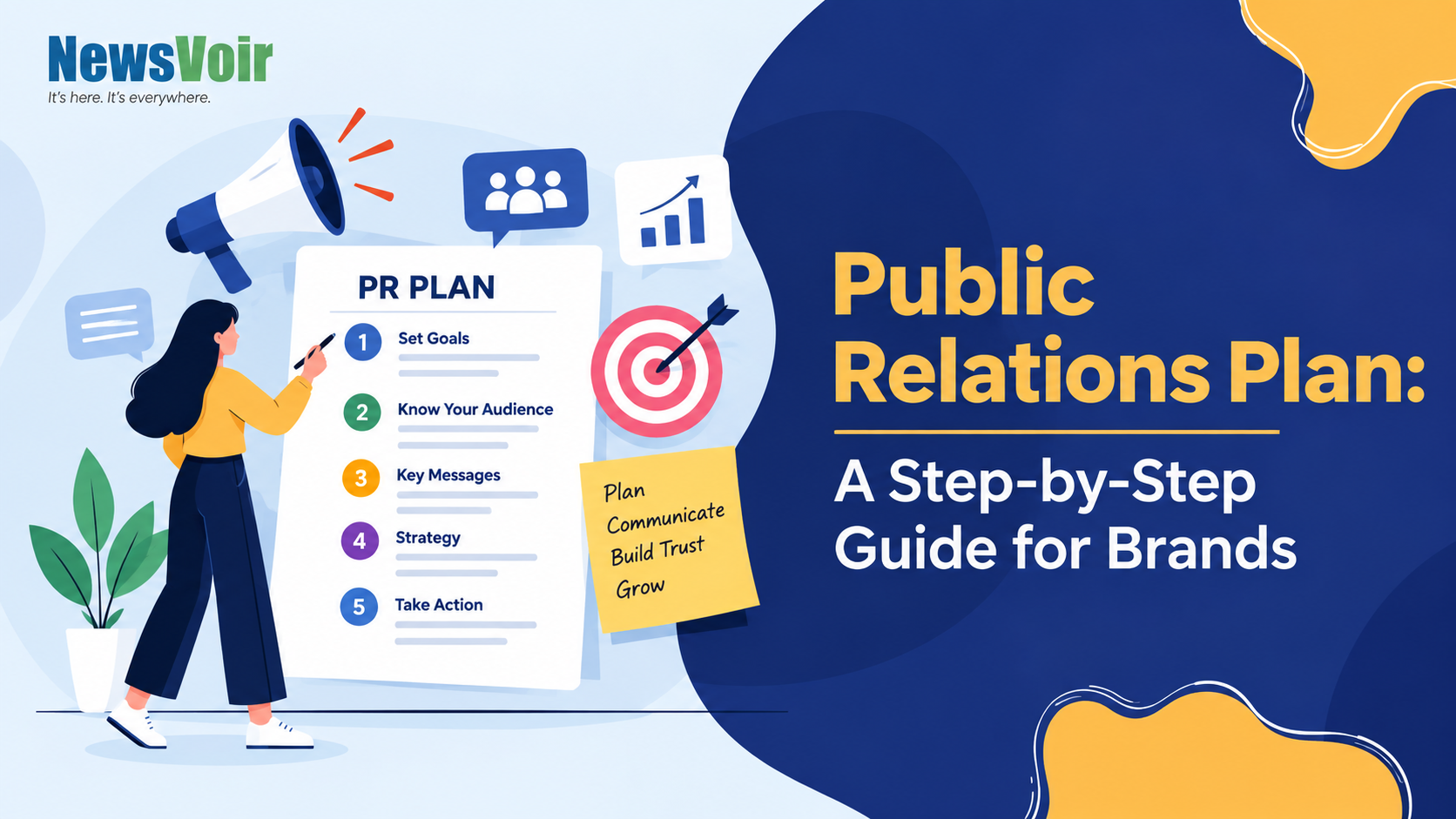
Public Relations Plan: A Step-by-Step Guide for Brands
A successful public relations campaign starts with a clear plan. A public relations plan provides a structured approach for defining communication goals, identifying target audiences, developing key messages, selecting the right PR activities, and measuring results.
Whether you are launching a new product, building brand awareness, strengthening media relationships, or managing ongoing communications, a well-defined PR plan helps ensure that every activity works toward a common objective.
In this guide, we outline 10 essential steps for creating and implementing an effective public relations plan, from setting clear goals and defining your audience to planning PR activities and measuring campaign performance.
What Is a Public Relations Plan?
A public relations plan is a structured strategy that outlines how a brand will communicate with its target audiences, build awareness, manage its reputation, and achieve specific communication goals. It brings together the key messages, audiences, PR activities, communication channels, timelines, budgets, and methods used to measure results.
A PR plan helps ensure that every communication activity has a clear purpose and supports the broader goals of the organization. Depending on the brand and its objectives, a public relations plan may include activities such as press release distribution, media outreach, content creation, webinars, events, speaking opportunities, and digital PR.
A well-planned PR strategy also makes it easier to coordinate activities, allocate resources effectively, track progress, and identify which efforts are delivering the desired results.
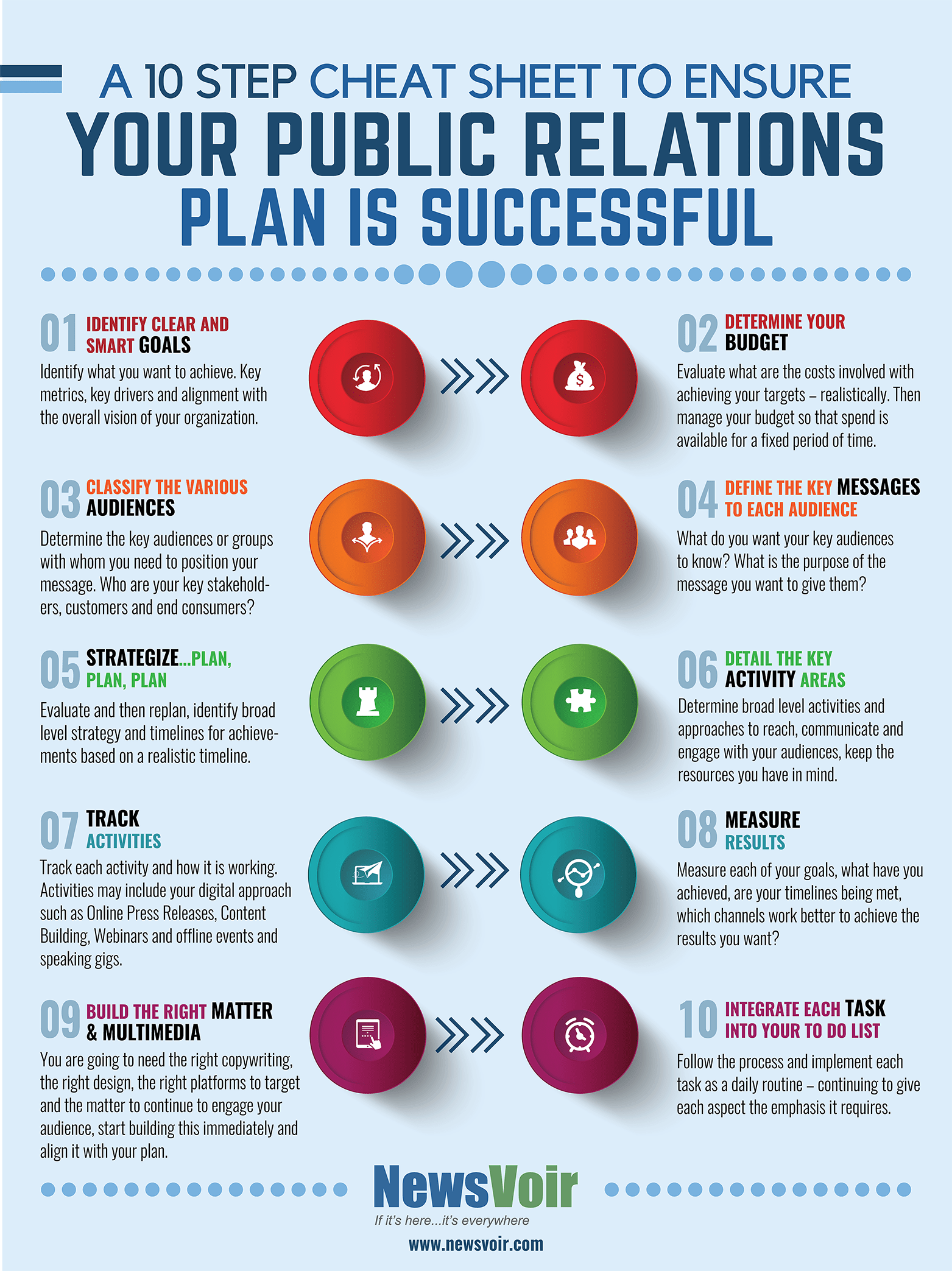
1. Set Clear and SMART PR Goals
The first step in creating a successful public relations plan is to define what you want to achieve. Your PR goals should support the broader objectives of your organization and give your team a clear direction for every communication activity.
Set goals that are SMART — Specific, Measurable, Achievable, Relevant, and Time-bound. Depending on your business objectives, your PR goals may include increasing brand awareness, generating relevant media coverage, improving online visibility, building credibility, reaching a new audience, or supporting a product or service launch.
Once your goals are defined, identify the key metrics and drivers that will help you measure progress. Clear goals make it easier to decide which PR activities to prioritize and determine whether your efforts are delivering the desired results.
2. Determine Your PR Budget
A clear budget helps you plan your PR activities realistically and allocate resources where they can have the greatest impact. Start by identifying the costs associated with achieving your PR goals and consider both planned and potential expenses.
Your PR budget may include costs related to press release distribution, content creation, media activities, events, design, multimedia assets, PR tools, and other communication activities. Prioritize activities based on your goals and the audiences you want to reach.
It is also important to set a realistic timeline for your spending. Review your budget regularly and adjust your allocation based on campaign performance, changing priorities, and the activities that are delivering the best results.
3. Identify and Classify Your Target Audiences
A successful public relations plan starts with knowing who you want to reach. Identify the audiences that are most important to your brand and understand their needs, interests, expectations, and communication preferences.
Your audiences may include customers, potential customers, employees, investors, business partners, journalists, industry professionals, and other key stakeholders. Not every audience will need the same information or communication approach.
Classify your audiences based on their relevance to your PR goals and prioritize the groups you want to influence. This will help you choose the right communication channels, develop more relevant messages, and create PR activities that are more likely to connect with the people who matter to your brand.
4. Define Key Messages for Each Audience
Once you have identified your target audiences, determine what you want each audience to know, understand, or remember about your brand. Your key messages should be clear, relevant, consistent, and aligned with your overall PR goals.
Different audiences may have different interests and expectations. For example, customers may want to understand the benefits of a product or service, while journalists may be more interested in the news value, data, or broader industry relevance of a story.
Keep your core message consistent across communication channels while adapting the supporting information to suit each audience. A well-defined messaging framework helps ensure that your public relations plan communicates the right information to the right people at the right time.
5. Develop Your PR Strategy and Timeline
Once your goals, audiences, and key messages are defined, develop a PR strategy that brings them together. Determine which communication approaches and PR activities are most relevant to your objectives and identify how each activity will contribute to the overall plan.
Create a realistic timeline for your PR activities, including content creation, press release distribution, media outreach, events, webinars, and other planned communications. Assign responsibilities, set deadlines, and establish milestones to keep the campaign on track.
A PR plan should not be treated as a one-time document. Review your strategy regularly, evaluate what is working, and make adjustments when priorities, timelines, or campaign results change. A flexible and well-organized approach can help your PR efforts stay aligned with your broader business goals.
6. Plan Your PR Activities and Channels
Once your strategy and timeline are in place, identify the PR activities and communication channels you will use to reach your target audiences. Choose activities based on your goals, audience preferences, available resources, and the type of message you want to communicate.
Your PR activities may include press release distribution, media outreach, content creation, webinars, industry events, speaking opportunities, interviews, and digital PR. Consider which channels can help you reach your audiences globally most effectively and how each activity fits into your overall PR strategy.
Define what needs to be done, who will be responsible for each activity, and when it needs to be completed. A clear activity plan helps your team stay organized and ensures that resources are focused on activities that support your PR objectives.
7. Track PR Activities and Campaign Progress
Once your PR activities are underway, track their progress regularly to understand what has been completed and how each activity is performing. Tracking helps ensure that your campaign stays aligned with the planned timeline, responsibilities, and objectives.
Your PR activities may include press release distribution, media outreach, content creation, webinars, events, interviews, and speaking opportunities. Keep a record of important activities, publication opportunities, media responses, and campaign milestones.
Regular tracking also allows you to identify gaps or activities that are not progressing as planned, giving you an opportunity to make timely adjustments.
8. Measure PR Results and Performance
Tracking activities tells you what has been done, while measurement helps you understand whether those activities are achieving your PR goals.
Define the key metrics you will use to evaluate your results. Depending on your objectives, these may include media coverage, publication quality, website traffic, backlinks, brand visibility, audience engagement, and leads or conversions.
Compare your results against the goals and timelines established at the beginning of the campaign. Identify which activities and channels are producing the strongest results and use these insights to improve future PR campaigns.
9. Create Compelling Content and Multimedia Assets
Effective PR requires more than a well-defined strategy. You also need relevant, engaging, and newsworthy content that can communicate your message effectively to your target audiences.
Develop the right press releases, articles, visuals, images, videos, infographics, presentations, and other multimedia assets based on your PR objectives and communication channels. Make sure the content is accurate, easy to understand, and tailored to the audience you want to reach.
Start preparing your content and creative assets early and align them with your PR timeline. Having the right materials ready can help your team respond quickly to media opportunities and maintain consistency across different communication channels.
10. Turn Your PR Plan Into an Actionable To-Do List
A PR plan is only effective when it is consistently implemented. Break your overall strategy into specific tasks and add them to a clear PR to-do list with responsibilities, deadlines, and priorities.
Review the list regularly and track the completion of each activity. Make adjustments when priorities change, new opportunities arise, or campaign results indicate that a different approach is needed.
Consistency is key to successful public relations. By turning your PR strategy into actionable tasks and following through on them, you can keep your communications organized and ensure that every PR activity contributes to your broader goals.
PR Activities to Include in Your Plan
The PR activities you choose should depend on your goals, target audiences, budget, and overall communication strategy. A combination of online and offline activities can help brands reach audiences through multiple channels.
Some common PR activities to consider include:
- Press Release Distribution: Share important company announcements, product launches, milestones, and news with relevant media and online publications.
- Media Outreach: Build relationships with journalists and pitch relevant stories, expert opinions, or company news to the appropriate media outlets.
- Content Creation: Develop articles, thought leadership pieces, interviews, case studies, and other content that supports your PR objectives.
- Digital PR: Use online channels to improve brand visibility, strengthen credibility, and reach relevant audiences.
- Events and Webinars: Organize or participate in events, webinars, conferences, and industry discussions to engage directly with your target audiences.
- Speaking Opportunities: Identify relevant conferences, panels, podcasts, and industry forums where brand representatives can share their expertise.
- Visual and Multimedia Content: Use images, videos, infographics, and other visual assets to make your communications more engaging and easier to understand.
Rather than trying to use every available PR activity, select the channels and activities that are most relevant to your objectives and audience. Your PR plan should clearly define what you will do, when you will do it, who is responsible, and how the results will be measured.
How to Measure the Success of a PR Plan
Measure your PR results against the goals you defined at the beginning of your campaign. Depending on your objectives, key metrics may include media coverage, publication quality, brand visibility, website traffic, backlinks, audience engagement, and leads or conversions.
Review these results regularly to identify which PR activities and channels are working best and where your strategy needs improvement. The goal is not simply to generate more coverage, but to ensure your PR efforts are contributing to your overall objectives.
Conclusion
A well-structured public relations plan gives brands a clear roadmap for communicating with the right audiences and achieving their PR goals. From setting objectives and defining key messages to planning activities and measuring results, each step plays an important role in building an effective PR strategy.
The key is to remain consistent, track performance, and adapt your approach based on what works. With the right planning and execution, PR can help strengthen brand visibility, credibility, and relationships with key audiences.
Want to explore this topic further? Read these related NewsVoir blogs for more insights on PR strategy, press releases, media relations, and digital PR.
Do’s and Don’ts of Press Release Writing for Better Media Pickup
Frequently Asked Questions
1. What is a public relations plan?
A public relations plan is a structured strategy that outlines a brand’s PR goals, target audiences, key messages, activities, communication channels, timelines, and methods for measuring results.
2. Why is a public relations plan important?
A public relations plan helps brands organize their communication activities, reach the right audiences, maintain consistent messaging, allocate resources effectively, and measure PR performance.
3. What should a PR plan include?
A PR plan should typically include clear goals, target audiences, key messages, PR strategies, planned activities, timelines, budgets, responsibilities, and performance metrics.
4. What are some common PR activities?
Common PR activities include press release distribution, media outreach, content creation, digital PR, events, webinars, interviews, speaking opportunities, and other activities designed to build brand visibility and credibility.
5. How do you measure the success of a PR plan?
PR performance can be measured using metrics such as media coverage, publication quality, brand visibility, website traffic, backlinks, audience engagement, and leads or conversions, depending on the campaign objectives.