


How to Create and Execute a Successful PR Plan
A well-structured PR plan helps brands organize their communication activities, reach the right audiences, and work toward defined public relations goals. Instead of approaching PR activities individually, a plan provides a framework for deciding what needs to be communicated, who should receive the message, which channels to use, and how results will be measured.
From defining objectives and identifying audiences to managing budgets, executing activities, and evaluating performance, each part of the plan contributes to the overall PR strategy.
In this guide, we explain how to create and execute a successful PR plan, with practical steps to help you organize your PR activities and improve them over time.
What Is a PR Plan?
A PR plan is a structured approach that outlines how a brand will manage its public relations activities to achieve specific communication goals. It brings together the objectives, target audience, key messages, PR activities, resources, and methods for measuring results.
A PR plan helps turn broader communication goals into actionable steps. It can include activities such as media outreach, press releases, content creation, social media communication, events, and other initiatives that support the brand’s objectives.
A well-planned approach also makes it easier to allocate resources, manage the PR budget, track progress, and identify areas that need improvement. This gives teams a clear framework for executing PR activities and refining them based on results.
Why Is a PR Plan Important?
A PR plan helps brands organize their communication activities around clear objectives instead of approaching each PR activity separately. It provides a structured way to decide what needs to be communicated, who the communication should reach, and which activities can support the overall goals.
A well-defined PR plan also helps teams prioritize their resources and manage activities such as media outreach, content creation, press releases, and digital communication. Setting a budget for different activities makes it easier to track spending and assess the value generated from PR efforts.
Regular evaluation is another important part of PR planning. Tracking results can help identify gaps, understand which activities are working, and make changes where needed. This allows the plan to evolve as audience needs, communication priorities, and results change.
How to Create and Execute a PR Plan
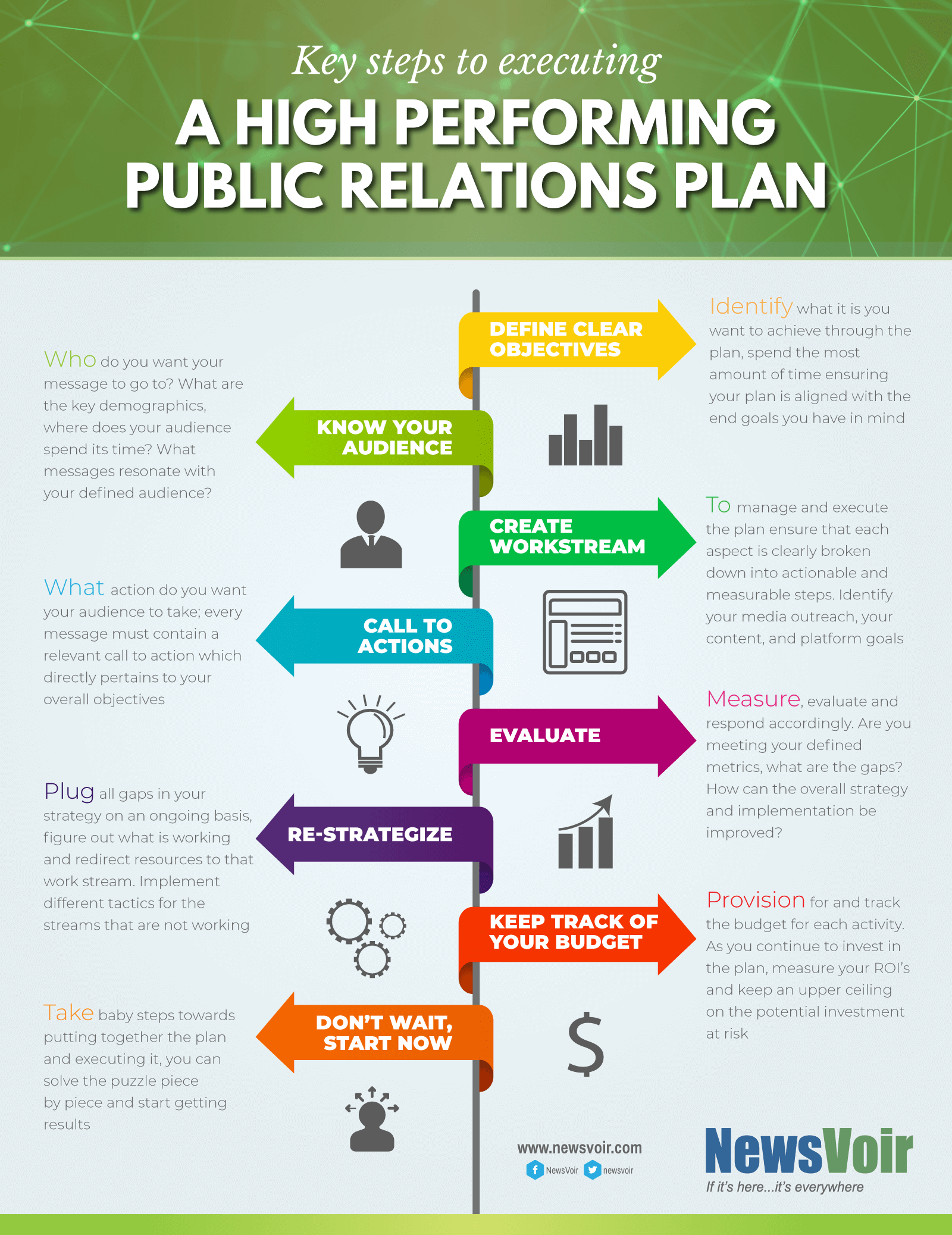
Creating and executing a PR plan involves turning your communication objectives into clear, actionable activities. The process should cover what you want to achieve, who you want to reach, what you want to communicate, how the activities will be carried out, and how the results will be evaluated.
Define Clear Objectives
Start by identifying what you want your PR activities to achieve. Your objectives could include increasing brand visibility, reaching a specific audience, supporting a product or business announcement, building media relationships, or strengthening brand credibility.
Clear objectives provide direction for the rest of the PR plan and make it easier to evaluate results later.
Identify Your Target Audience
Understand who you want your communication to reach. Consider your audience’s interests, needs, demographics, and the channels or platforms they use to consume information.
A clear understanding of your target audience helps you develop more relevant messages and select appropriate media and communication channels.
Develop Key Messages
Define the main points you want your audience to understand about your brand, announcement, product, or initiative. Keep these messages clear, relevant, and consistent across your PR activities.
The messaging can then be adapted to different audiences and communication channels while maintaining the same core information.
Create Actionable Workstreams
Break your PR plan into specific activities that can be executed and measured. These may include media outreach, press releases, content creation, social media communication, events, or other relevant PR activities.
Assign responsibilities, timelines, and expected outcomes to each activity so that the plan can be implemented in a structured manner.
Define Calls to Action
Identify what you want your audience to do after receiving your communication. Depending on the objective, this could include visiting a website, reading an article, registering for an event, contacting the brand, or learning more about an initiative.
A relevant call to action helps connect individual PR activities with the broader objectives of the plan.
Set and Manage Your PR Budget
Determine how much you can allocate to each PR activity and keep track of spending throughout the campaign. A defined budget helps teams prioritize activities and monitor the resources being used.
Regularly reviewing the budget alongside results can also help you understand where resources are being used effectively and where adjustments may be required.
Execute the PR Plan
Once the objectives, audience, messaging, activities, responsibilities, timelines, and budget are defined, begin executing the plan according to the agreed schedule.
Maintain consistency across communication channels and coordinate activities so that different PR efforts support the same overall objectives.
Measure and Evaluate Results
Track the performance of your PR activities against the objectives defined at the beginning of the plan. Depending on the campaign, this can include media coverage, audience reach, website traffic, engagement, backlinks, or other relevant metrics.
Regular evaluation helps identify gaps and provides useful information for improving future PR activities.
Refine and Re-strategize
A PR plan should be flexible enough to change based on results. If certain activities are not delivering the expected outcomes, review the approach, identify gaps, and adjust the strategy or resources accordingly.
This ongoing process of evaluating and refining the plan can help keep PR activities aligned with changing objectives and audience needs.
Tips for Managing a PR Plan
Managing a PR plan effectively requires regular coordination, tracking, and adjustments. Once the plan is in execution, teams should review activities and results regularly rather than waiting until the end of the campaign.
Keep Track of Progress: Monitor whether planned PR activities are being completed according to the agreed timelines. Tracking progress helps identify delays or gaps early and keeps the overall plan on schedule.
Monitor Your Budget: Review spending against the budget allocated to each activity. This helps ensure resources are being used as planned and allows teams to make adjustments when necessary.
Review Performance Regularly: Evaluate relevant results such as media coverage, audience reach, website traffic, engagement, or other campaign-specific metrics. Regular reviews make it easier to identify which activities are contributing to the objectives.
Adapt When Needed: A PR plan does not have to remain fixed. If an activity is not producing the expected results, review the approach and consider changing the messaging, channel, resources, or tactics.
Keep Communication Consistent: Ensure that the key messages remain consistent across media outreach, content, social media, press releases, and other PR activities. Consistency helps maintain a clear brand message throughout the campaign.
Frequently Asked Questions
What is a PR plan?
A PR plan is a structured framework that outlines a brand’s public relations objectives, target audience, key messages, activities, resources, and methods for measuring results.
Why is a PR plan important?
A PR plan helps organize communication activities around clear objectives. It also helps teams manage resources, coordinate activities, track performance, and make adjustments when needed.
What should a PR plan include?
A PR plan should generally include clear objectives, target audiences, key messages, PR activities, timelines, responsibilities, budget, calls to action, and methods for measuring results.
How do you measure the success of a PR plan?
Success can be evaluated using metrics relevant to the campaign objectives. These may include media coverage, audience reach, website traffic, engagement, backlinks, or other relevant performance indicators.
Can a PR plan be changed after execution begins?
Yes. A PR plan can be reviewed and adjusted based on performance, audience response, available resources, or changes in communication priorities. Regular evaluation helps identify areas where the strategy or activities may need to be refined.